Say it out loud. Florence.
You have said it a thousand times. On the phone. On an envelope. At a ballgame. To somebody from out of town who asked where you are from. It rolls off so easy that you have probably never once stopped to think about what it actually is.
It is a girl's name. A real girl. She lived, she breathed, and somehow her name ended up on your water bill, your high school, your welcome signs, and your own two lips, every single day, more than a hundred and seventy years after somebody first spoke it into the pines.
Here is who she was, and how it happened.
There was nothing here
Go back to 1852. Where you are sitting right now was pine forest. Not a town, not a street, not a stoplight. Just tall pines and sandy soil and the kind of quiet that has real weight to it.
Then the railroad came.
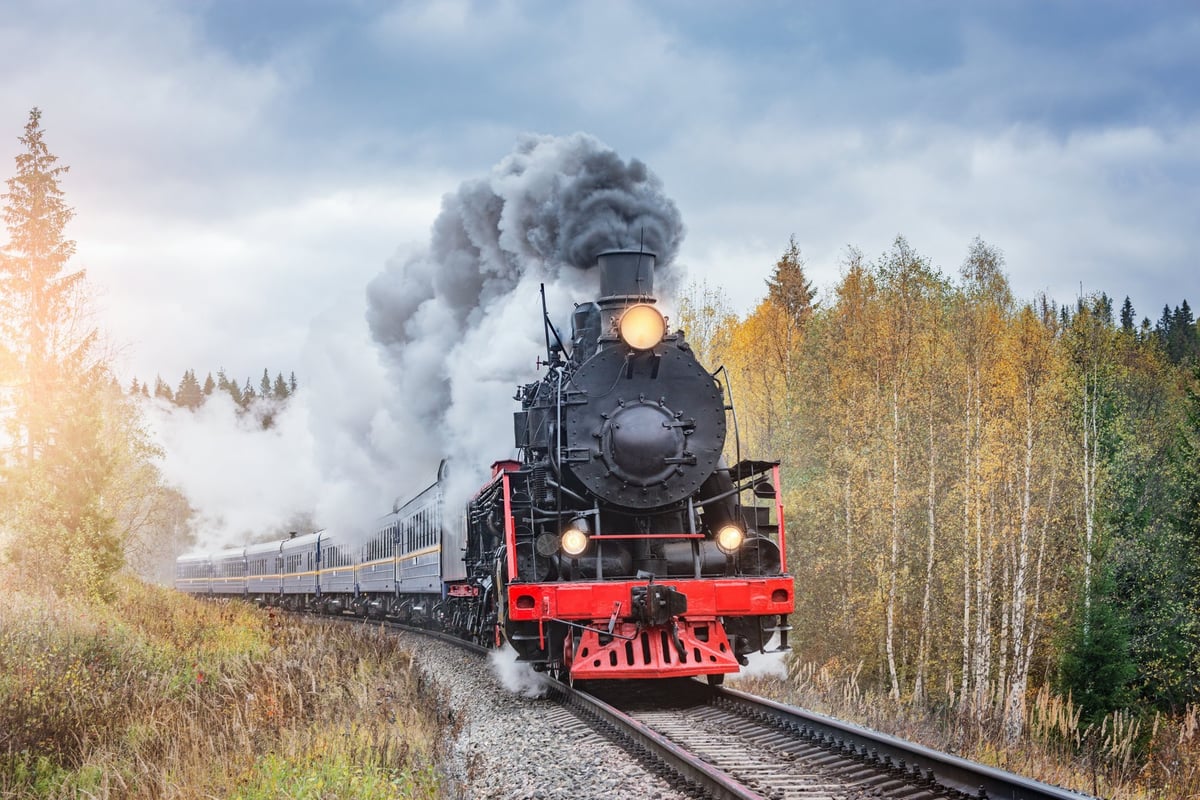
A construction crew building the Wilmington and Manchester line was pushing through the woods, laying iron mile by mile, and they reached this patch of forest about nine miles south of Darlington. Something big was about to happen right here, though nobody standing in those trees could have fully seen it yet. Three separate railroads were on a path to cross at this one spot. The Wilmington and Manchester. The North Eastern. The Cheraw and Darlington. Three iron lines, all bending toward the same lonely crossroads in the pines.
Where railroads cross, towns are born. And this one was going to need a name.
The board shelter in the woods
At first it barely counted as a place. The earliest records do not even call it Florence. They call it James Station, a little stop with a rough plank shelter and not much else. One traveler who came through in early 1853 remembered it as a station out in the pine woods with no depot at all, just some boards nailed together to keep the rain off. Blink, and you would have missed it from the train window.
But the men building that railroad knew what was coming. They knew a crossing like this would matter. And when it came time to give the place a real name, they had choices on the table.
The choice
This is the moment the whole story turns on.
The most powerful man in the picture was General William Wallace Harllee, the founder and president of the Wilmington and Manchester Railroad. It was his line, his vision, his crossing. By every custom of the day, the town at the heart of his railroad could have carried his own name, and in fact one of the names floated for it was Harlleeville. Another was Wilds, after a respected local judge. Big names. Important men.
Harllee passed on all of it. He did not put his own name on the map. He did not hand it to the judge. He gave the town the name of his daughter.
Florence Henning Harllee.
And here is the detail that ought to stop you cold. She was not a grown woman when this happened. She was a little girl, about five years old, when her father wrote her name across the land and let it outlive them both. Florence was not a boast and it was not a slogan. From the very first breath of this town, it was a father's love for his child.
The girl behind the name
So who was she?
Florence Henning Harllee was born in 1848. As the story has been handed down, her father had been reading a Charles Dickens novel, Dombey and Son, around the time she came into the world, and he took her name from its brave and tender heroine, a devoted daughter named Florence. If that is true, then the name on your welcome signs traveled a long way to reach you, from the pages of an English novel, to a baby girl, to a whole South Carolina city.
But the sweetest part is not how she got her name. It is what she did with her life.
Florence never married. She never went looking for a bigger life somewhere grander. She stayed, in the town that carried her name, and she gave herself to it. She became a schoolteacher. She worked in the schools and in the library, pouring into the children and the people of Florence for decades, quietly trying to make the place better for everybody in it. She lived in a house on the corner of Irby and Pine, streets you can still drive today, until she died in 1927. She rests now at Hopewell Presbyterian, beside the father who had loved her enough to name a town for her.
Sit with that arc. A man names a crossroads in the pines after his five-year-old daughter. That little girl grows up, and instead of leaving, she spends her entire life serving the town that bears her name, a teacher who helped raise whole generations of Florence children. She did not just lend the place her name. She spent a lifetime earning it.
Now watch it grow
And look what came up out of those pines around her.
In 1853 the railroad bought five acres to build a proper depot, and Florence had its official start. The same tracks that named the town went on to feed it. After the Civil War the railroad shops opened, and the town rose fast, first on cotton, then timber, then bright leaf tobacco. By 1897 the three lines had merged into the mighty Atlantic Coast Line, the biggest taxpayer for miles around. By the 1940s, Florence was the largest rail station in the entire state, with fourteen passenger trains rolling through every single day. In 1965 the nation named it an All-America City.
From a board shelter in the woods to fourteen trains a day. From an empty forest to a city full of churches and schools and ballfields and front porches, all of it rising up around a quiet schoolteacher who happened to share its name.
So say it like you mean it
Here is what all of this leaves you holding.
The next time you say Florence, you are not just naming a dot on the interstate between New York and Miami. You are saying the name of a little girl a father loved beyond reason. You are naming a woman who gave her whole quiet life to this community. You are speaking a word that started as a whisper in a pine forest and grew into home for more than a hundred thousand people.
Not many towns in America can say a thing like that. Ours can.
So the next time somebody asks you where you are from, do not mumble it. Do not shrug it off. Say it like you finally know the secret. Say it like it means something, because it always has, and because she did.
Florence.
Sources and credits
Reporting and local history by HelloFlorenceSC.com Staff. This story was drawn from the City of Florence's official history, the Florence County Museum's history of the town's railroad founding, and the South Carolina Encyclopedia. Biographical details on Florence Henning Harllee, including her birth in 1848, her life as a Florence schoolteacher, her home at the corner of Irby and Pine, and her death in 1927, come from local historical research published in VIP Magazine and coverage in the Post and Courier. The account of her name coming from the heroine of Charles Dickens's "Dombey and Son" is longstanding local tradition rather than documented fact.