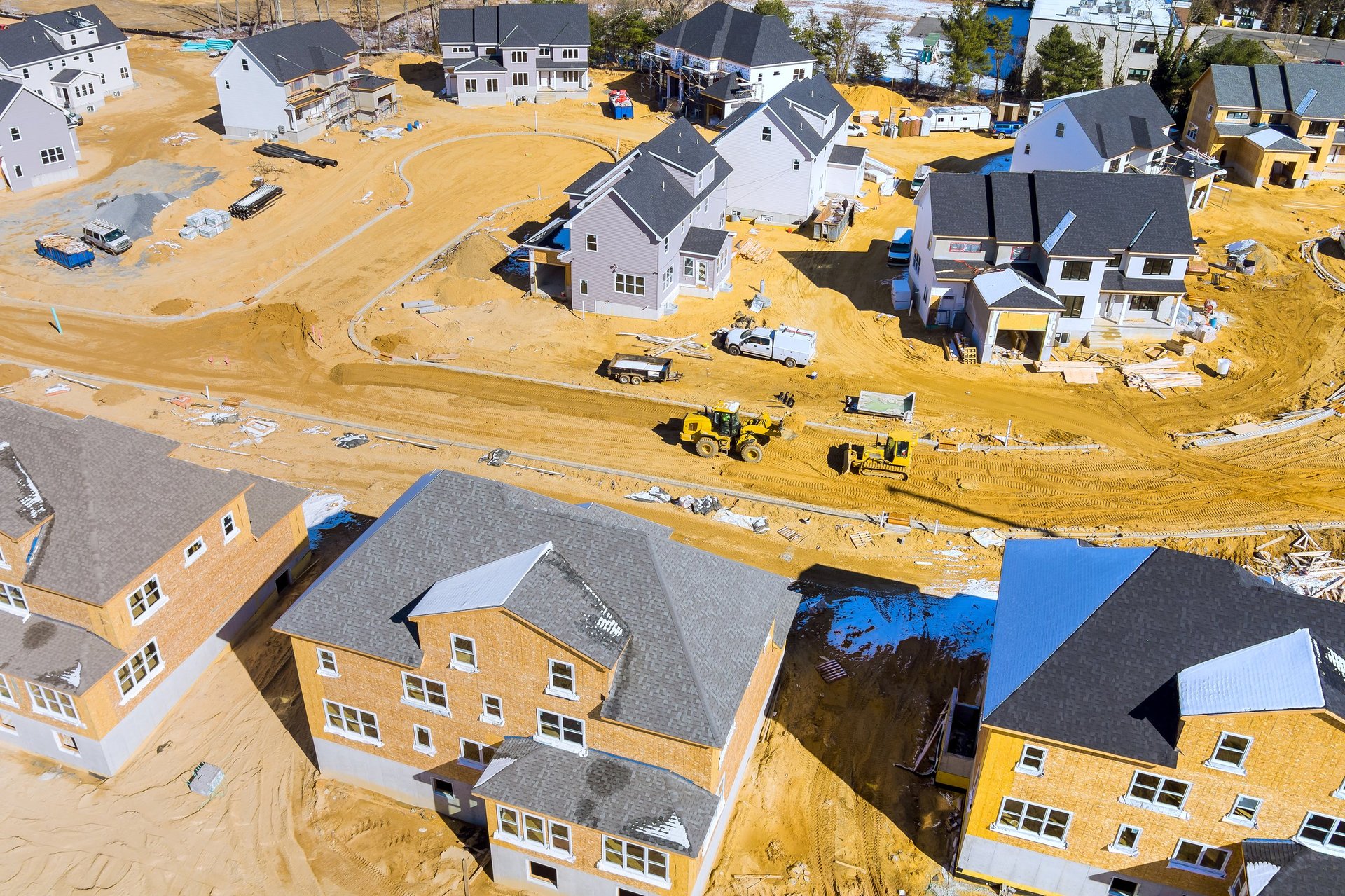
If you have driven down any major corridor in Florence County lately,
you already know the story without needing a single statistic. New
townhomes are climbing out of red clay that was a soybean field two
years ago. Medical offices, storage facilities, and apartment
complexes are rising on all four sides of the city. For-sale signs
barely have time to weather before "sold" banners go up over them.
The numbers back up what your eyes are telling you. The City of
Florence's own October 2025 housing needs assessment found the city
will likely need about 7,000 new housing units over the next five
years, split roughly evenly between rentals and owned homes, after the
city's population climbed 7.5 percent in just the last five years.
Florence County has grown steadily since 2021, adding more than 2,000
residents. Zoom out further and the picture gets even bigger: South
Carolina was the fastest-growing state in the country between July
2024 and July 2025, gaining roughly 66,000 new residents from other
states in that single year alone, on top of more than 100,000
newcomers during the 2022-2023 stretch. Florence has also reached Tier
1 status with the SC Department of Revenue, putting it in the same
industrialized-county tier as Charleston and Greenville.
A big piece of that momentum has a name and a dollar figure attached
to it. AESC, a Japanese electric vehicle battery manufacturer, has
committed a total of $3.12 billion to Florence County, supporting
2,700 new jobs at its facility inside the 1,000-acre Global Technology
Park, which supplies batteries for BMW electric vehicles. It is being
called the biggest economic development announcement in the county's
history, and it is not alone. GE HealthCare, Thermo Fisher Scientific,
Cheney Brothers, Otis Elevator, and McCall Farms are all adding to the
same growth curve. If you are still deciding whether the move makes
sense for your family, our
guide to living in Florence, SC after one year
walks through what that growth actually feels like day to day.
By almost every economic measure, Florence is winning. And yet,
Florence and Florence County are living through a classic and
well-documented economic phenomenon known as
retail and entertainment leakage, where rapid
residential and industrial growth outpaces local after-hours lifestyle
options. Thousands of newcomers are arriving, drawn by major regional
economic investment in the medical, industrial, and retail sectors,
and community feedback is making it clear: people want more accessible
entertainment, family spaces, and dining options than the city
currently offers.
That feedback showed up loud and clear this week. When
HelloFlorenceSC's Front Porch Talk asked a simple, honest question on
Facebook, "What does Florence still need that it does not have?", the
flood of answers said something the growth charts don't capture: a
rage room. A real dog park. Wegmans. Trader Joe's. A sports bar with a
big screen. Dave and Buster's. Carrabba's. An indoor playground for
toddlers. Top Golf. A Denny's that stays open late.
Ten different answers, but really, one answer. Florence has more
rooftops than it has ever had. It does not yet have enough places to
put the people who live under them.
Retail and Entertainment Leakage: Why This Isn't Just a Florence
Feeling
Urban economists call it retail and entertainment leakage, and it is
one of the best-documented patterns in small and mid-sized city
growth. It happens when demand for a category of goods or experiences
in a town outpaces what local businesses actually offer, so residents
take their money, and their evenings, somewhere else. It is the same
reason a growing number of Florence families already plan their
weekends around a
day trip out of town
rather than an evening downtown.
Santa Fe, New Mexico, a city with a lot in common with Florence in
spirit if not in size, ran headlong into this exact issue. A retail
leakage study there found the city was holding its own in almost every
shopping category except one: family-friendly entertainment. Families
were driving to Albuquerque for mini golf, go-karts, and laser tag,
because building an entertainment venue takes serious capital, and
because so much of Santa Fe's own workforce commutes in and out,
emptying downtown just when it should be filling up on nights and
weekends. That second part should sound familiar. Florence sits at the
crossroads of I-95 and I-20, a
region known for its easy access to everywhere else, which has always meant a city built for people passing through. The
same geography that built Florence's industrial and medical base can
work against it after 5 p.m., when there is more reason to keep
driving than to stop.
What Florence Needs: Sorting the Wish List By What's Realistic
Not every request on that Facebook thread carries the same odds. It
helps to separate them by what it would actually take to make each one
real.
The long shots, at least for now. Trader Joe's
founder Joe Coulombe famously said he would not consider a trade area
with fewer than 40,000 households likely to include the chain's core
shopper, built around dense, higher-income, walkable pockets. Wegmans
has historically leaned on similar density and income thresholds.
Florence County's population sits around 137,000 spread across a wide,
largely rural footprint, which is a very different shape than the
dense suburban corridors these chains typically target. That does not
mean never. It means the county's growth curve has to keep climbing,
and it has to concentrate, before these particular logos make business
sense here.
The realistic middle. Family entertainment concepts
like Top Golf and Dave and Buster's, and casual chains like
Carrabba's, generally follow rooftops and household income, not
headlines. As Florence's housing stock grows by the thousands of units
the city itself is forecasting, and as household incomes rise with the
AESC-driven job growth already underway, this category gets more
attainable every year. This is where a strong business recruitment
push, paired with real site data on Florence's growth, can genuinely
move the needle with corporate site selectors watching for exactly
these numbers.
The achievable now. A proper off-leash dog park, an
indoor play space for toddlers, a rage room, a true sports bar built
for game days. None of these require a national chain's real estate
committee to sign off. They require local capital, a landlord willing
to take a chance, and a customer base that shows up. Families looking
for what already exists in the meantime can start with our
guide to Florence, SC for families
and our running list of
the best things to do in Florence, SC. Florence has already proven, in its own downtown, that the
achievable-now playbook works.
Florence Has Already Done This Once: The Downtown Revival Case Study
This is the part of the story worth shouting from the rooftops,
because it did not come from a mall developer or an out-of-state
chain. It came from Florence itself.
Back when the Florence Downtown Development Corporation signed on with
the state's Main Street program, the historic downtown district's
vacancy rate stood at a rough 42 percent. Storefronts sat empty for
years. Through a sustained, roughly two-decade push combining public
and private investment, business incubators, and preservation work,
that vacancy rate fell to just 4 percent. Downtown Florence today has
real restaurants, two hotels, boutiques, art galleries, an independent
bookstore, a wine bar, an artisan chocolate shop, public art, and
around 100 businesses and counting.
That is not a small case study. That is proof, produced right here,
that when the community and its institutions commit to a plan and
stick with it for years instead of months, Florence can build the kind
of place people want to spend an evening in rather than drive away
from.
How Florence Compares to Rock Hill and Spartanburg
There is another Florence success story worth knowing, because it
shows the city already understands how to compete with its larger
neighbors when it commits to something. Florence, Greenville, and Rock
Hill have all become case studies in how mid-sized South Carolina
cities can win at sports tourism. Florence's sports tourism now
generates an estimated $12.5 million in annual economic impact and
draws more than 50,000 visitors a year to the city. Rock Hill's
approach leaned into arts and culture instead, building South
Carolina's first cultural district downtown around galleries, museums,
and a mural-covered Main Street, a strategy that has since landed Rock
Hill on national "best downtown" lists. Spartanburg took a third path,
anchoring a $500 million mixed-use redevelopment around a new minor
league baseball stadium designed to serve, in the words of the
project's own backers, as the city's "front porch."
Three different cities. Three different bets. All three paying off.
Florence does not need to copy any of them exactly. Florence needs to
decide, deliberately, what its own version of that bet looks like for
nightlife, family fun, and everyday third places, the way it already
has for sports and for downtown.
What Actually Moves the Needle From Here
The research points to a few clear paths forward, and none of them
require waiting on a national chain to notice Florence exists.
Tell the growth story with numbers, not vibes.
Corporate site selectors and local entrepreneurs alike make decisions
off density, income, and traffic count data. The more clearly
Florence's population and housing growth gets documented and shared,
the more those thresholds start working in the city's favor rather
than against it.
Back local capital first. The dog park, the rage
room, the sports bar, the indoor playground: these are exactly the
kind of investments a local entrepreneur, a group of investors, or
even a nonprofit can bring to life without a national headquarters'
approval. Downtown Florence's own turnaround was built by local hands,
not a franchise agreement.
Keep the workforce in town after 5 p.m. Santa Fe's
cautionary tale was as much about commuters leaving as it was about
missing venues. Florence's growth is bringing more residents who live
here and work here. Giving them a reason to stay downtown, or in their
own neighborhoods, after work is half the battle.
Keep asking the question. The Front Porch Talk post
that sparked this conversation is exactly the kind of grassroots
signal that shaped Florence's downtown revival two decades ago. The
businesses, developers, and city leaders paying attention to what this
community is asking for, in a comment section on a Tuesday night, are
the ones most likely to be telling this same success story twenty
years from now.
Florence is not short on growth. It is short on catching up to its own
growth. The city has already proven, in its own downtown and on its
own ballfields, that it knows how to close that gap when it decides
to. The comment section has spoken. Now it is up to the rest of the
community, old residents and new, to decide what gets built next.
Frequently Asked Questions About Florence, SC's Growth and
Entertainment Gap
Why is Florence, SC growing so fast right now?
Florence's growth is driven by major regional economic investment,
including AESC's $3.12 billion electric vehicle battery facility
supporting 2,700 jobs, along with expansion from GE HealthCare, Thermo
Fisher Scientific, Cheney Brothers, Otis Elevator, and McCall Farms.
South Carolina was also the fastest-growing state in the country
between July 2024 and July 2025, and Florence has reached Tier 1
industrialized-county status with the state.
What is retail and entertainment leakage?
Retail and entertainment leakage happens when local demand for
shopping, dining, or entertainment outpaces what a city's own
businesses offer, so residents spend that money, and time, in a
neighboring city instead. Florence's growth in housing and jobs has
outpaced its growth in after-hours entertainment options, a pattern
documented in similarly situated cities like Santa Fe, New Mexico.
What does Florence, SC need most, according to residents?
When HelloFlorenceSC asked Florence residents directly, the most
requested additions included a dog park, an indoor playground for
toddlers, a sports bar, a rage room, and casual dining and
entertainment brands like Top Golf, Dave and Buster's, and Carrabba's.
Has Florence, SC solved a problem like this before?
Yes. Downtown Florence's historic district vacancy rate fell from
roughly 42 percent to just 4 percent over about two decades, through a
sustained partnership between the Florence Downtown Development
Corporation, the state's Main Street program, and private investment.
It is considered a model for how the city can close its current
entertainment gap.
FLORENCE TODAY | HelloFlorenceSC
Know your city. Enjoy your city.