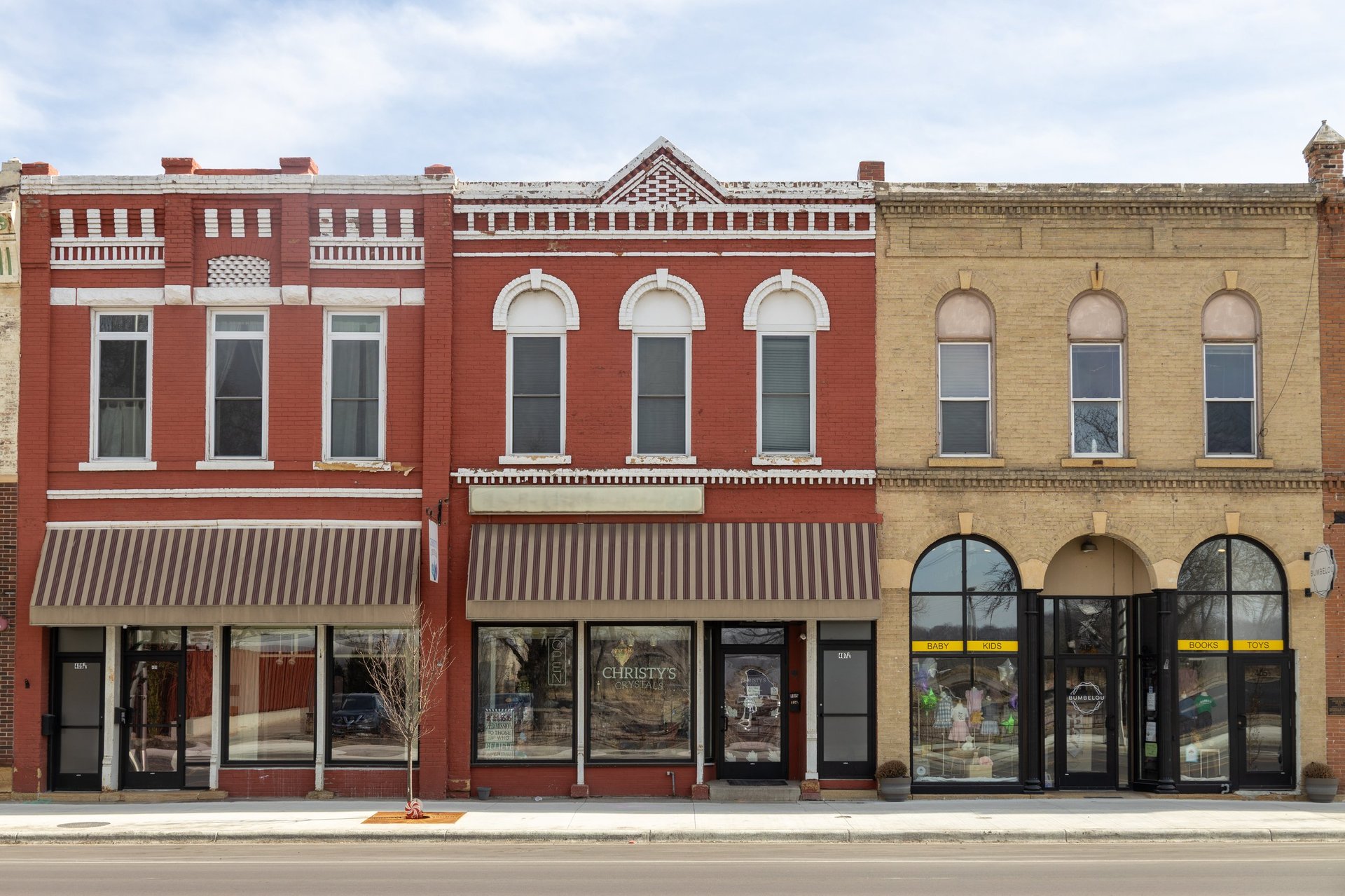
Mankato, Minnesota, USA - March 3, 2025: Exterior architectural view of ornate 19th century buildings along historic North Front Street, listed in the National Register of Historic Places.
Back to The Florence Files
The Florence Files Installment 5 Places · Lost Florence 9 min read

The Hotel That Started Florence, and the Fight That Made It Famous

Beneath a parking lot near the Amtrak tracks sits the foundation of the building that turned a stretch of Pee Dee timberland into a city.

Coit & Baroody Streets, Florence SC

Before Florence had a downtown, it had a hotel. Before it had a skirmish marker or a museum exhibit, it had a wooden building with twenty rooms and a wraparound porch, built to convince railroad investors that this patch of South Carolina pine forest was worth betting on.

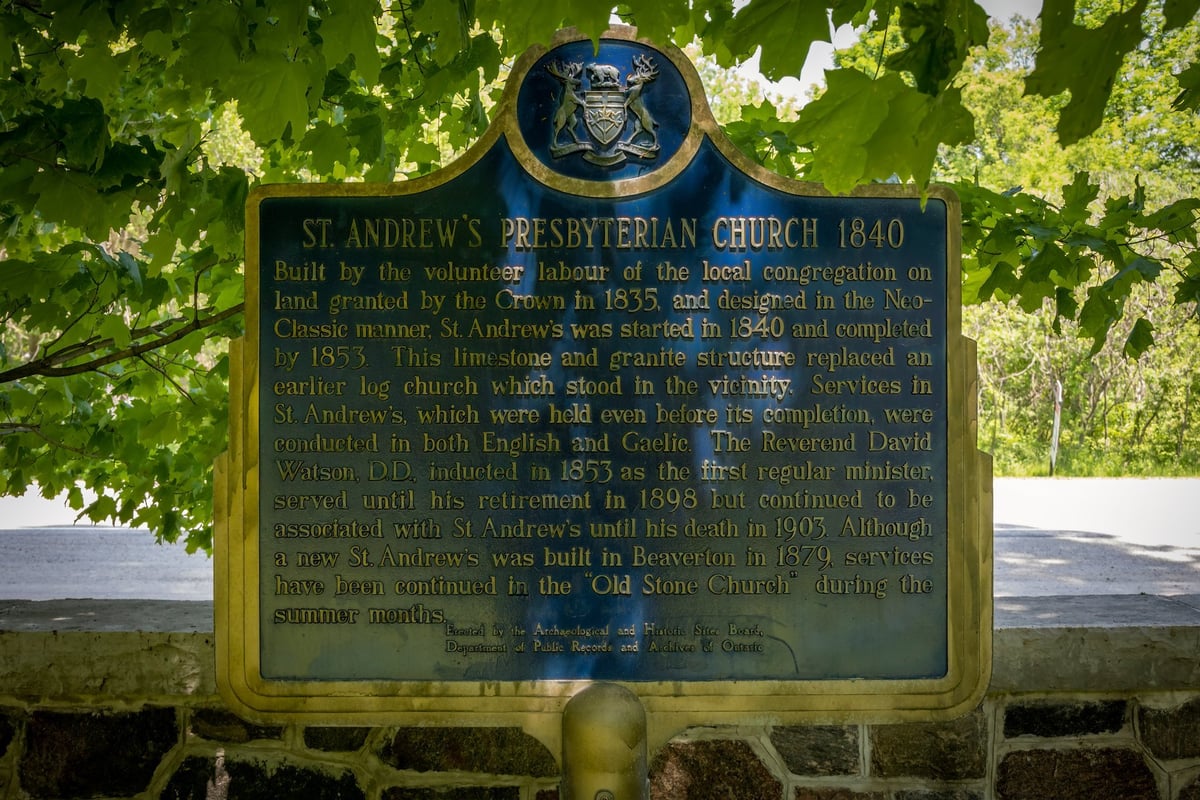
A historical plaque stands on the grounds of St. Andrew's Presbyterian Church (or just the Old Stone Church) in Beaverton, Ontario.

The 1949 historical marker at Coit and Baroody Streets marks the site of the 1865 skirmish at Gamble's Hotel. The marker still stands within walking distance of the parking lot where the hotel's foundation was found.

Illustrative photo — not the Florence marker itself Photo: iStock / Getty Images — licensed stock image

That building was Gamble's Hotel. For about three decades it stood at the corner of what is now Coit and Baroody streets, across from the depot where three rail lines met. Today the site sits under what was, until recently, an old bus station lot in the Urban Square development. In 2023, archaeologists spent several weeks digging there and found what was left of it.

The North Eastern Rail Road Company built the hotel around 1859 and 1860, originally naming it the Florence Hotel. The company's goal wasn't hospitality for its own sake. It wanted a building impressive enough to convince investors and travelers that the rail junction taking shape here had a future.

“An enormously important site in the history of Florence.”

Andrew Agha · Archaeologist, 2023 excavation

Ben Zeigler, chair of the Archaeological Institute of the Pee Dee, put it more directly: it's where the city began.

The Florence Hotel · c. 1859

Two stories · twenty rooms · a parlor · a dining room · a porch with engraved columns · believed at the time to be the largest wood-frame building in South Carolina

The railroad company sent a man named Joseph Gamble to run it. He later bought the hotel outright, and it took his name for good.

Gamble's Hotel wasn't just a stopover for railroad executives. On March 5, 1865, it became a battlefield.

Union cavalry, part of the final stages of Sherman's march through the Carolinas, tried to raid the small railroad village of Florence to destroy rail equipment and supplies. Confederate forces met them at the hotel in what local historians call the Skirmish at Gamble's Hotel. The Union cavalry was pushed back and failed to reach its objective.

It was a minor engagement in the larger scope of the war, but a real one, documented by the Florence County Museum and marked with a historical marker the United Daughters of the Confederacy installed at the site in 1949. Visitors can still park at Coit and Baroody and walk over to see it.

What's documented

Union cavalry pushed back before reaching its objective

Documented by the Florence County Museum

1949 marker placed by the United Daughters of the Confederacy

Still walkable today — park at Coit and Baroody

The hotel outlasted the war by nearly three decades. As the railroad companies moved their shops east in the late 1870s, the center of town shifted away from Gamble's, and the hotel's importance faded with it. In August 1893, four years after Gamble's death, the building burned to the ground.

For 130 years, the site sat paved over and mostly forgotten, save for the skirmish marker. That changed in September and October 2023, when Agha and his team took advantage of a construction pause at the Urban Square site to dig.

Recovered from the dig

Pale white buttons

Champagne bottle cage

A woman's shoe heel

A soot-and-ash burn layer

Small, ordinary objects left behind by people passing through a building that no longer exists. Underneath the more recent layers, the team found a layer of soot and ash marking exactly where the hotel burned.

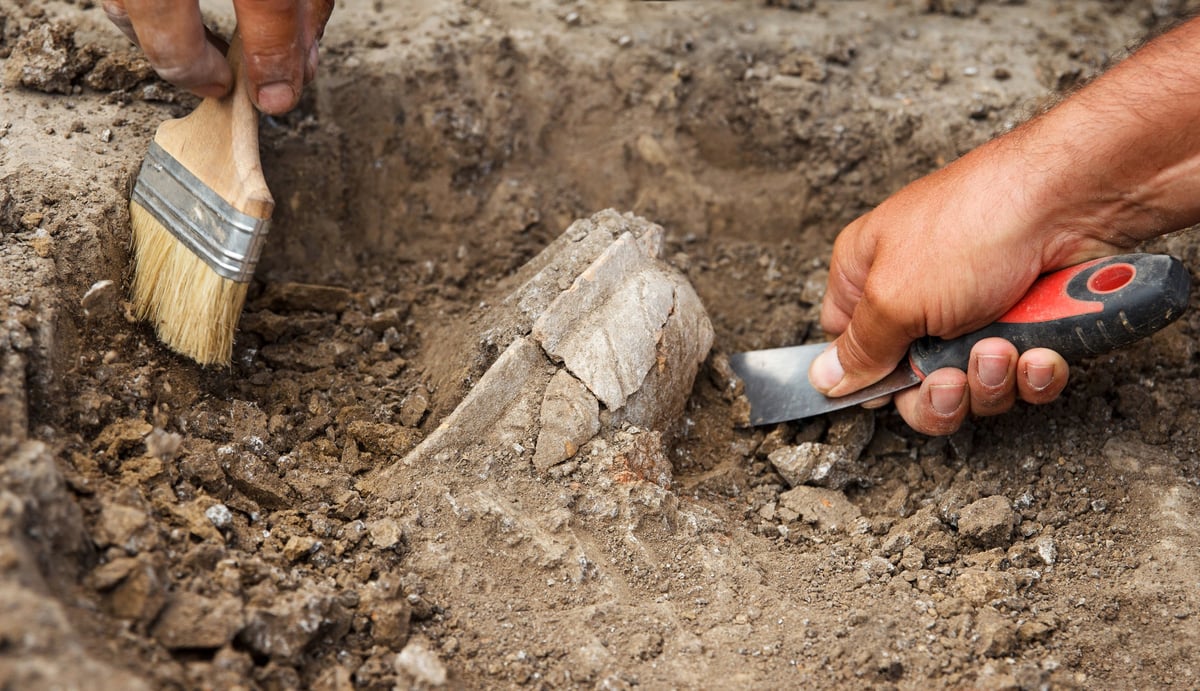
Archaeological excavations, archaeologists work, dig up an ancient clay artifact with special tools in soil

Archaeologists uncovered buttons, glassware, and the hotel's burn layer beneath downtown Florence in 2023.

Illustrative photo — not an image of the 2023 Florence dig Photo: iStock / Getty Images — licensed stock image

The city has since broken ground on the Gamble Apartments on the same property, a new residential building named for the hotel that once stood there. Some of the artifacts recovered from the dig are planned for display in the building's lobby. The 102-unit development is expected to be completed in late 2026 or early 2027.

Walk a few blocks from that lot today and you'll find a different kind of hospitality. Hotel Florence, a boutique hotel that opened downtown in 2013, houses Victor's Bistro on its ground floor. It sits inside the broader downtown revival that has reshaped Evans and Dargan streets over the past two decades.

42%

Vacancy, then

4%

Vacancy, today

That district has gone from a 42 percent building vacancy rate to roughly 4 percent, with more than $300 million in public and private investment over the past ten years, according to the city's own downtown development office.

It's not the same building, and nobody is claiming a straight line from a wood-frame hotel that burned in 1893 to a boutique hotel that opened in 2013. But the instinct behind both is the same one the North Eastern Rail Road Company had in 1860: build something worth arriving for.

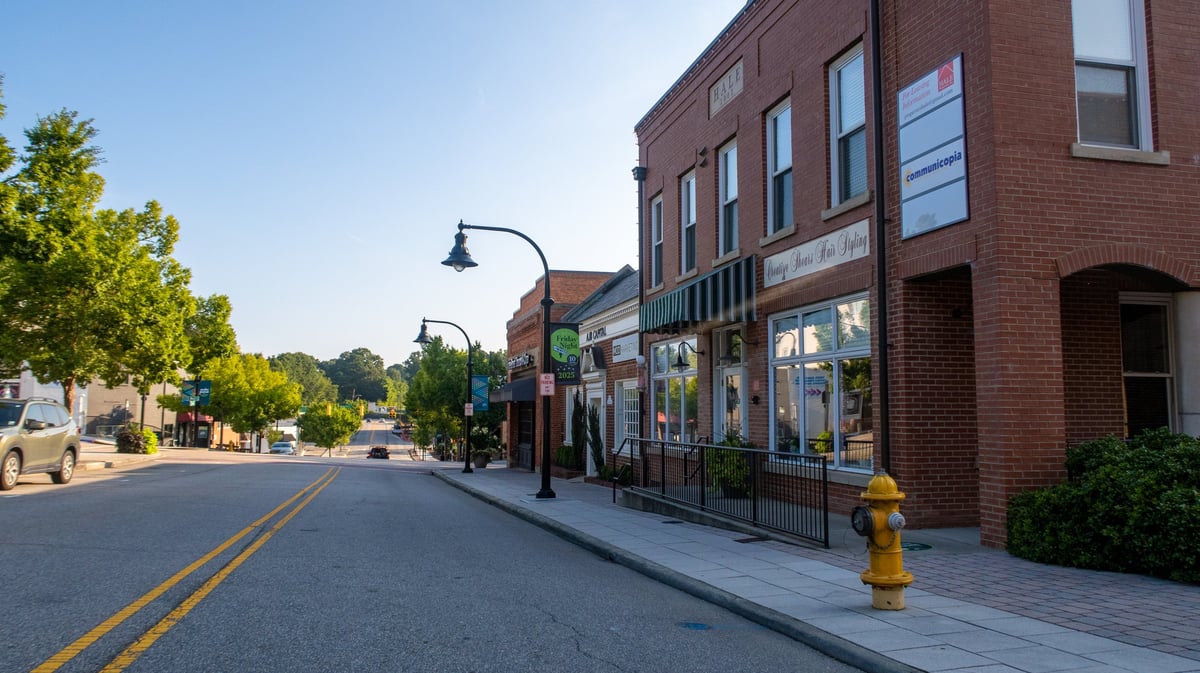
A quiet morning view of historic downtown Wake Forest, North Carolina, featuring classic brick storefronts, tree-lined sidewalks, and vintage street lamps under clear blue skies.

Hotel Florence, on Evans Street, opened in 2013 as part of downtown Florence's ongoing revival.

Illustrative photo of a Southern historic downtown — not Hotel Florence itself Photo: iStock / Getty Images — licensed stock image
Keep reading the story

Gamble's Hotel is one piece of a much longer arc. These two go deeper:

Sourcing & the Florence Files standard

This article is sourced from the Post and Courier's October 2023 reporting on the Gamble's Hotel archaeological dig, the Florence County Museum's account of the March 5, 1865 skirmish, SC Picture Project's history of Hotel Florence, and the City of Florence Downtown Development Corporation's published downtown investment figures.

A note on the photos: no AI-generated images of real venues or historical scenes appear with this story. The photos above are cleared, illustrative images, and each is labeled as such. If you hold a rights-cleared photo of Gamble's Hotel, the 2023 excavation, or Hotel Florence, we'd like to hear from you.

Photo credits
  • Historical marker (hero): iStock / Getty Images — licensed stock image. Illustrative only; not the Florence marker at Coit and Baroody.
  • Archaeological dig: iStock / Getty Images — licensed stock image. Illustrative only; not the 2023 Urban Square excavation.
  • Downtown streetscape: iStock / Getty Images — licensed stock image. Illustrative only; not Hotel Florence on Evans Street.

The rights-cleared historical imagery for this story — the Florence County Museum's c. 1861 photograph of Gamble's Hotel, the 2023 excavation photography (Post and Courier / Archaeological Institute of the Pee Dee), and current photography of Hotel Florence and Victor's Bistro — is credited to those holders and will replace the illustrative images above when licensed.

Photographer byline
Hero — Gamble's Hotel / marker
Photographer to be credited — rights holder pending. Museum collection photography request in progress.
The dig — Urban Square, 2023
Photographer to be credited — Post and Courier / Archaeological Institute of the Pee Dee, pending license.
Now — Hotel Florence / Evans St.
Photographer to be credited — venue or commissioned photography, pending license.

Each image will carry its individual photographer byline the moment a rights-cleared original is supplied.

This article will be updated if additional detail from the Gamble Apartments project or further archaeological findings becomes available.
Add to the record

Did your family tell you about Gamble's Hotel?

Maybe you remember the marker at Coit and Baroody before the parking lot. Maybe someone in your family worked at the depot. Or maybe you watched the dig in 2023 with your own eyes.

Your memory might be the detail the record left out.

Installment 5: The Hotel That Started Florence Places · Lost Florence · Culture

Know your city. Enjoy your city.