For a lot of longtime Florence residents, there's a before and an after,
and the line between them is one storm.
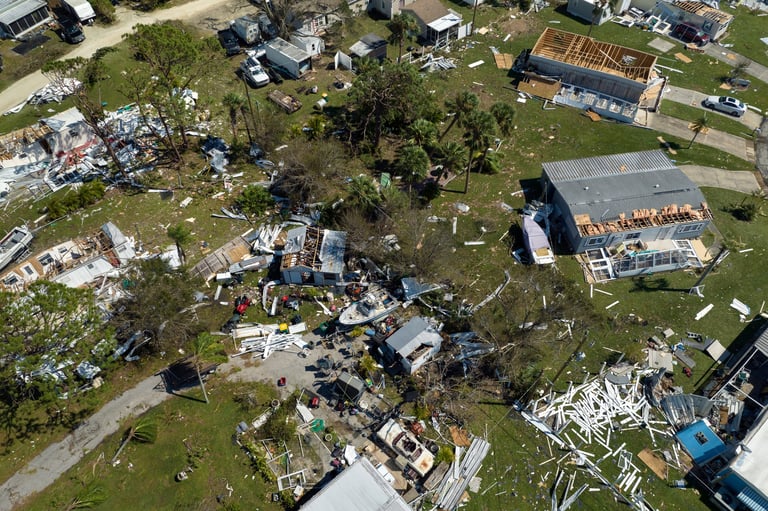
The kind of damage Hurricane Hugo left behind across South Carolina in
September 1989. Photo not taken in Florence; shown here as
representative of the widespread destruction.
Illustrative photo — not an image of the actual event
Hurricane Hugo made landfall just after midnight on
September 22, 1989, near Sullivan's Island, as a Category 4 hurricane with sustained
winds of 135 to 140 miles per hour. It was strong enough that it kept
producing hurricane-force wind gusts hundreds of miles inland, long
after it should have weakened. Florence, roughly 100 miles from where it
came ashore, was not spared. A National Weather Service disaster survey
afterward noted that the most likely tornado activity connected to the
storm touched down near Florence and Sumter, about two hours after
landfall.
September 22, 1989
Landfall near Sullivan's Island · Category 4 · 135–140 mph sustained
winds · Florence about 100 miles inland
Terry Ward was a reporter for the Florence Morning News that
night. He later wrote about riding out the storm at a shelter set up at
what was then Francis Marion College,
now Francis Marion University. He'd planned on staying home in his
mobile home near campus. His girlfriend, a Francis Marion student,
showed up at his door and told him plainly they needed to leave.
The night
Three buildings, one long night
Inside the shelter, the storm kept forcing people deeper into the campus.
Stop 1
The student center
They sat on the floor as the storm built. About thirty minutes in, one
of the building's thick safety-glass windows blew out of its frame.
Stop 2
The gym next door
Campus security moved everyone over. It held for a while longer —
until a turbine on the roof tore loose in the wind.
Stop 3
The handball courts
Moved once more, this time into the courts, and they waited it out
there until morning.
The morning after
When the sun came up
When the sun came up, the damage was everywhere. Trees were down across
roads that were no longer passable. Houses and buildings were missing
fronts and roofs. Traffic lights hung from single wires or were simply
gone. Stores sat dark with no power. Mobile homes were off their
foundations, some split open by fallen trees.
Storm damage from Hurricane Hugo, September 1989. Photo location not
specifically identified as Florence; shown here as representative of
the widespread damage across South Carolina.
Photo: NOAA Photo Library (public domain)
Trees down across roads that were no longer passable
Houses and buildings missing fronts and roofs
Traffic lights hanging from single wires, or gone
Mobile homes off their foundations, some split open
And then, according to Ward's account, something else happened. In the
days after, neighbors who'd never spoken before started helping each
other clean up. Relief caravans came in from across the country. For a
town that had just been hit hard, there was, in his words, something
close to a
holiday feeling in the middle of the wreckage.
That combination, real devastation followed by a community pulling
together to dig out of it, is probably why Hugo still works as a
timestamp for people who lived through it here. If you know someone who
says "before Hugo" or
"after Hugo", they're not
exaggerating. They're marking the moment Florence's modern relationship
with hurricanes actually started.
Were you in Florence for Hugo?
Did you shelter somewhere, lose power for weeks, or help a neighbor
dig out afterward? Tell us in the comments. We're building this story
with your memories, not just the official record.
Your memory might be the detail the record left out.